Software Development Trends and Insights Shaping the Industry in 2026
- Marcus Koch

- Apr 16
- 5 min read

The software development landscape in 2026 is evolving at a pace that few could have predicted just a decade ago. Emerging technologies, changing business expectations, and a growing emphasis on efficiency and scalability are redefining how applications are built, deployed, and maintained. Organizations are no longer just adopting new tools—they are rethinking entire development paradigms.
From AI-assisted coding to platform engineering and the maturation of cloud-native architectures, the industry is undergoing a structural transformation. This article explores the most influential software development trends, case studies, and insights that are shaping the future of the field and redefining what it means to build modern software.
AI-Augmented Development Becomes the New Standard
Artificial intelligence has moved from being an experimental tool to a foundational component of the software development lifecycle. In 2026, AI-powered assistants are deeply integrated into development environments, helping engineers write, review, and optimize code in real time.
These tools go beyond simple autocomplete functionality. They can generate entire code snippets, suggest architectural improvements, detect vulnerabilities, and even write unit tests. As a result, developers are able to focus more on solving business problems rather than dealing with repetitive coding tasks.
However, this shift also introduces new challenges. Teams must ensure that AI-generated code meets quality and security standards. Blind reliance on AI can lead to hidden bugs or inefficient implementations. Therefore, human oversight remains essential.
Organizations are also investing in training developers to work effectively alongside AI tools. This includes understanding prompt engineering, evaluating AI outputs, and integrating these tools into existing workflows. The result is a hybrid model where human creativity and machine efficiency complement each other.
Case studies from leading tech companies show that teams leveraging AI-assisted development have reduced time-to-market significantly. In some cases, development cycles have been shortened by up to 40%, highlighting the transformative potential of these technologies.
Platform Engineering and Developer Experience Take Center Stage
As systems grow more complex, organizations are placing greater emphasis on internal developer platforms (IDPs). Platform engineering has emerged as a discipline focused on improving developer productivity by providing standardized tools, environments, and workflows.
In 2026, developer experience (DX) is a key competitive differentiator. Companies that invest in streamlined development processes are able to attract and retain top talent while delivering products faster.
Internal platforms typically include pre-configured environments, automated CI/CD pipelines, and self-service infrastructure provisioning. This reduces the cognitive load on developers, allowing them to focus on building features rather than managing infrastructure.
A significant trend is the adoption of “golden paths”—predefined workflows that guide developers through best practices. These paths help ensure consistency, reduce errors, and accelerate onboarding for new team members.
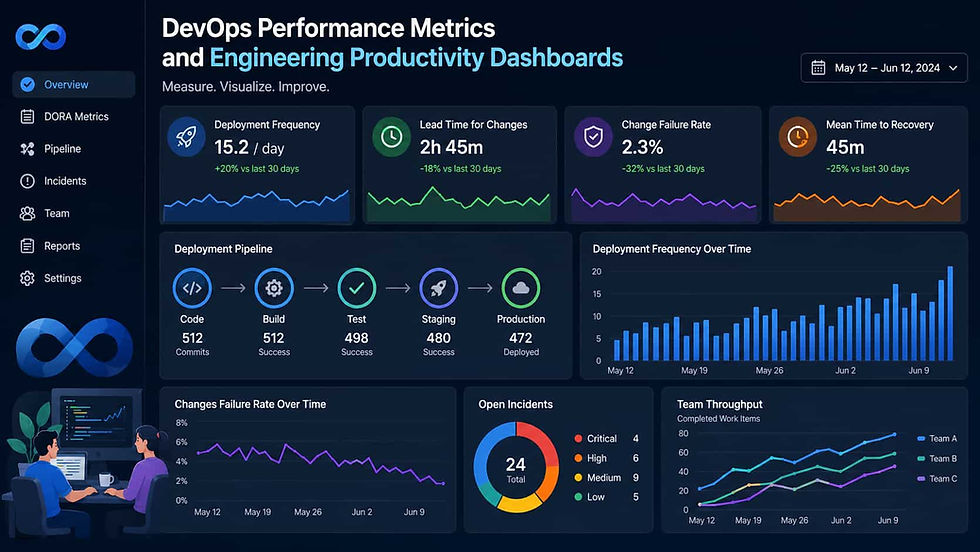
Organizations are also measuring DX through metrics such as deployment frequency, lead time, and developer satisfaction. These insights are used to continuously refine internal platforms and improve overall efficiency.
Real-world examples demonstrate that companies investing in platform engineering have achieved substantial productivity gains. By reducing friction in the development process, they enable teams to innovate more rapidly and deliver higher-quality software.
Cloud-Native Evolution and the Rise of Distributed Architectures
Cloud-native development continues to dominate the industry, but in 2026 it has reached a new level of maturity. Organizations are moving beyond basic containerization to embrace fully distributed architectures that leverage microservices, serverless computing, and edge computing.
This evolution is driven by the need for scalability, resilience, and global availability. Modern applications must handle unpredictable workloads, support real-time interactions, and deliver seamless user experiences across regions.
Microservices architectures allow teams to develop and deploy components independently, improving agility and reducing risk. Serverless computing further abstracts infrastructure management, enabling developers to focus solely on code.
Edge computing is another significant trend. By processing data closer to the source, organizations can reduce latency and improve performance. This is particularly important for applications such as IoT, gaming, and real-time analytics.
However, distributed systems also introduce complexity. Managing communication between services, ensuring data consistency, and monitoring system performance require advanced tools and practices.
To address these challenges, organizations are adopting observability platforms that provide deep insights into system behavior. These tools enable teams to detect issues जल्दी and maintain high levels of reliability.
Case studies highlight how companies have successfully transitioned to cloud-native architectures, achieving improved scalability and reduced operational costs. These examples underscore the importance of adopting a strategic approach to modernization.
The Expanding Role of Open Source and Collaborative Innovation
Open source software has always been a cornerstone of the development ecosystem, but its importance continues to grow in 2026. Organizations are increasingly relying on open source technologies to accelerate innovation and reduce costs.
The influence of open source communities for software developers extends far beyond code sharing. These communities foster collaboration, knowledge exchange, and the rapid evolution of technologies.
Developers actively contribute to open source projects, gaining valuable experience and building their professional reputations. Companies, in turn, benefit from access to a global pool of talent and expertise.
Another trend is the rise of corporate open source strategies. Organizations are not only consuming open source software but also contributing back to the community. This helps build trust, improve software quality, and drive adoption of their technologies.
Security and governance are critical considerations in open source adoption. Companies must implement processes to manage dependencies, monitor vulnerabilities, and ensure compliance with licensing requirements.
Despite these challenges, the benefits of open source are undeniable. It enables faster development, encourages innovation, and fosters a culture of collaboration that is essential for success in a rapidly changing industry.
Specialization, Data-Driven Development, and Industry-Specific Innovation
As the software industry matures, there is a growing trend toward specialization. Developers are increasingly focusing on specific domains such as fintech, healthcare, or e-commerce, gaining deep expertise in industry-specific requirements.
Data-driven development is another key trend. Organizations are leveraging analytics and user feedback to inform decision-making and prioritize features. This approach ensures that development efforts are aligned with business goals and user needs.
In this context, mobile app development insights play a crucial role in shaping user experiences. With the proliferation of mobile devices, applications must be optimized for performance, usability, and accessibility.
Industry-specific innovation is also driving change. For example, fintech companies are adopting advanced security measures and real-time processing capabilities, while healthcare organizations are focusing on interoperability and data privacy.
Case studies demonstrate how organizations are using data and specialization to gain a competitive edge. By understanding their users and industries, they are able to deliver more targeted and effective solutions.
This trend is expected to continue as technology becomes increasingly integrated into every aspect of business and society.
Conclusion
The software development industry in 2026 is characterized by rapid innovation, increasing complexity, and a strong focus on efficiency and collaboration. Trends such as AI-augmented development, platform engineering, cloud-native architectures, open source collaboration, and domain specialization are reshaping how software is built and delivered.
These changes are not just technological—they represent a fundamental shift in how organizations approach development. Success in this environment requires a willingness to adapt, invest in new tools and practices, and embrace continuous learning.
By understanding and leveraging these trends, companies can position themselves for long-term success. The ability to innovate, deliver high-quality products, and respond to changing market demands will be the defining factors in the years ahead.